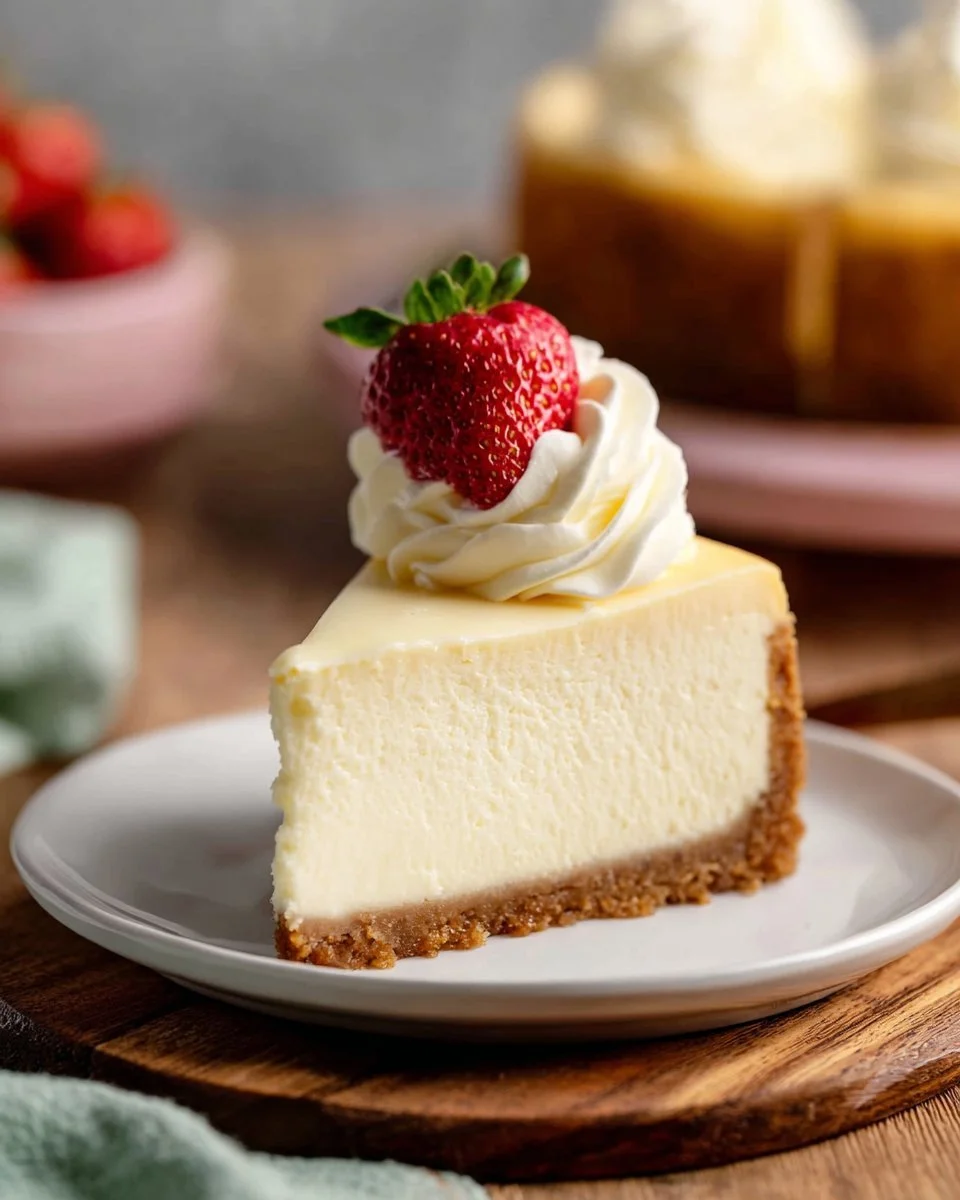
Classic Cheesecake
This classic cheesecake is a timeless dessert: creamy, dense, and just tangy enough to cut through the richness. The crust is buttery and slightly crisp, the filling is velvety and smooth, and a hint of vanilla and optional lemon adds a fresh aroma that fills the kitchen as it bakes. This is the kind of dessert that works for holidays, dinner parties, or a quiet weekend treat when you want something a little bit indulgent. If you enjoy exploring cheesecake variations, you might also like the autumn twist in Caramel Apple Cheesecake Bars, which play with similar textures and cozy flavors.
Ingredients
1 and 1/2 cups graham cracker crumbs
Finely crushed crackers form a classic, slightly sweet base that crisps when baked.1/4 cup granulated sugar
Adds just enough sweetness to the crust and helps it bind.5 Tablespoons unsalted butter, melted
Binds the crumbs and gives the crust a rich, buttery flavor.32 ounces full-fat brick cream cheese, softened
The foundation of the filling. Full-fat brick cream cheese gives the best texture and body.1 cup granulated sugar
Sweetens the filling and balances the cream cheese tang.1 cup full-fat sour cream
Adds creaminess and a subtle tang that brightens the filling.1 teaspoon pure vanilla extract
Brings depth and a warm aroma to the cheesecake.2 teaspoons fresh lemon juice (optional)
A small bright note that enhances flavor without overtaking it.3 large eggs
Provide structure and help the cheesecake set while keeping it tender.
Step-by-Step Instructions
Preheat your oven to 350°F (177°C). Prepare a springform pan so it is ready when your crust is pressed.
In a mixing bowl, combine the graham cracker crumbs, 1/4 cup sugar, and melted butter until the crumbs are evenly moistened. Press the mixture firmly and evenly into the bottom of the springform pan to form the crust. Tip: use a flat-bottomed measuring cup to press the crust tightly.
Bake the crust for 10 minutes. Remove from the oven and let it cool slightly while you prepare the filling.
In a large bowl, beat the softened cream cheese and 1 cup sugar together until smooth and free of lumps. Scrape the bowl as needed so the mixture is silky.
Add the sour cream, vanilla extract, and lemon juice if using. Mix until fully incorporated and smooth. Tip: mix on low speed to avoid incorporating too much air.
Add the eggs one at a time, mixing on low speed after each addition until just combined. Do not overmix; a few small air bubbles are fine but excess air can cause cracking.
Wrap the outside of the springform pan in aluminum foil to protect it from the water bath. Place the wrapped pan in a larger roasting pan and pour hot water into the roasting pan so it comes partway up the sides of the springform pan. This water bath helps the cheesecake bake gently and evenly.
Pour the cheesecake batter over the baked crust. Bake at 350°F (177°C) for 55 to 70 minutes, until the edges are set but the center still has a slight wobble. The exact time depends on your oven and the pan size.
Turn off the oven and leave the cheesecake inside with the door slightly ajar for 1 hour to cool gradually. After the hour, remove it from the water bath, cool to room temperature, then refrigerate for at least 4 hours or overnight before serving. Tip: chilling overnight gives the best texture and cleaner slices.
Recipe Details
- Prep Time: 20 minutes
- Cook Time: 1 hour 5 minutes to 1 hour 20 minutes (includes crust pre-bake and cheesecake bake)
- Total Time: About 6 hours 25 minutes to 6 hours 40 minutes, including cooling and refrigeration time
- Servings: 12 slices
- Calories: Approximately 590 kcal per serving
Tips, Storage & Variations
Tips
- Make sure the cream cheese is fully softened for a lump-free filling. Room temperature for about 30 to 60 minutes usually works well.
- Beat on low speed when adding eggs to avoid overwhipping and cracking.
- If the top starts to brown too much, tent loosely with foil during the last 10 minutes of baking.
Storage
- Refrigerate leftover cheesecake, covered, for up to 5 days.
- To serve, let slices sit at room temperature for 10 to 20 minutes to soften slightly.
Freezing
- Wrap the whole cheesecake tightly in plastic wrap and then foil, or slice and wrap individual pieces. Freeze for up to 2 months. Thaw overnight in the refrigerator before serving.
Flavor variations using only the listed ingredients
- Lemon-Forward: Make sure to include the 2 teaspoons fresh lemon juice in the filling for a subtle citrus lift.
- Extra Creamy Top: After baking and cooling, spread a thin layer of the full-fat sour cream across the top before chilling for a tangy, silky finish.
- Vanilla Highlight: Use the full teaspoon of pure vanilla extract and consider a brief extra stir by hand before chilling to emphasize the vanilla aroma.
- Rustic Mini Servings: Divide the batter into muffin tins lined with paper liners to create individual cheesecakes; bake for a shorter time and watch for set edges.
For another creamy twist on cheesecake texture, check out this marshmallow-based no-bake idea: Marshmallow Whip Cheesecake No Bake Dream Dessert.
You can also explore bold pairings like an espresso note in a different recipe example: Espresso Cheesecake Decadent Dessert Recipe, or try a playful, colorful take such as Fruity Pebbles Cheesecake Tacos for inspiration. If you like seasonal spice mixes, the technique used here works well with the flavor profile in Creamy Gingerbread Cheesecake Caramel Bliss Delight.
Frequently Asked Questions
Q: Can I use low-fat cream cheese or sour cream?
A: Full-fat produces the best texture and flavor. Low-fat will make the cheesecake less creamy and slightly more tangy.
Q: Why did my cheesecake crack?
A: Overmixing, baking at too high a temperature, or rapid cooling can cause cracks. Mix gently and cool slowly in the oven as instructed.
Q: How do I know when the cheesecake is done?
A: The edges should be set and the center should wobble slightly when you gently shake the pan.
Q: Do I have to use a water bath?
A: The water bath is recommended to prevent cracking and promote even baking, but you can skip it if you watch baking time closely.
Q: How long can I refrigerate the cheesecake?
A: Store covered in the refrigerator for up to 5 days for best quality.
People Also Ask
Q: Can I make this cheesecake ahead of time?
A: Yes, it benefits from chilling overnight for best texture and flavor.
Q: Is a springform pan necessary?
A: A springform pan makes removing the cheesecake easier, but you can use a regular pan and carefully invert it if needed.
Q: Can I double the recipe for a larger crowd?
A: Doubling the recipe requires a larger pan and adjusted bake time. It is easier to make two separate cheesecakes.
Q: Should I run a knife around the edge before removing the springform ring?
A: Yes, gently running a thin knife around the pan can help separate the cheesecake from the sides cleanly.
Q: What causes a soggy crust?
A: Too much butter or an underbaked crust can become soggy. Press the crust firmly and bake the 10 minutes as directed.
Q: Can I use crushed cookies instead of graham crackers?
A: Yes, crushed cookies can substitute for graham crumbs, but this changes the flavor profile while keeping the same method.
Q: How do I get clean slices?
A: Use a hot, clean knife and wipe it between cuts for neat slices.
Q: Is it okay if the center is still slightly jiggly when I take it out?
A: Yes, it will firm up during the cooling and chilling stages.
Conclusion
I hope this Classic Cheesecake recipe becomes a go-to for your celebrations and quiet evenings alike. The simple, trustworthy technique yields a rich, creamy cake that slices beautifully and pairs well with fruit or a spoonful of sour cream on top. For another detailed classic take, you can compare techniques with this Sally’s Baking Addiction Classic Cheesecake recipe and this Catastrophic Cook Classic Cheesecake guide to help refine your approach. Enjoy baking, and please share how yours turns out with friends and family for a warm moment around the table.